Albania
 Argentina
 Australia
 Austria
 Belgium
 Bosnia and Herzegovina
 Brazil
 Bulgaria
 Canada
 Chile
 Colombia
 Croatia
 Czech Republic
 Denmark
 Estonia
 Finland
 France
 Germany
 Greece
 Hungary
 Ireland
 Italy
 Latvia
 Lithuania
 Luxembourg
 Mexico
 Moldova
 Montenegro
 Netherlands
 New Zealand
 North Macedonia
 Norway
 Philippines
 Poland
 Portugal
 Romania
 Serbia
 Slovakia
 Slovenia
 South Africa
 Spain
 Sweden
 Switzerland
 Turkey
 Ukraine
 United Kingdom
 United States of America



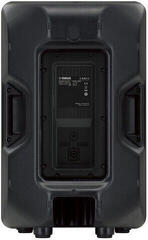
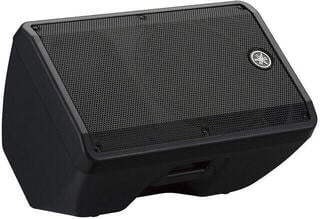
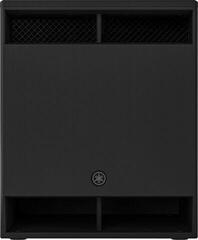
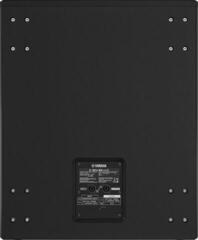
Passive Loudspeakers
A passive PA speaker has no built-in power amplifier, so you connect it to suitable external amplification with a speaker cable. This approach lets you select the amplifier separately, but also makes the overall system design responsible for impedance, power, cabling and protection. Passive speakers are used for main PA, stage monitoring, systems with subwoofers and permanent installations. Choose according to the role and compatibility, not the enclosure size alone.
What a passive PA speaker needs to operate
An audio source or mixing console does not provide power intended to drive a passive speaker directly. A power amplifier, or the amplifier section of a powered mixing console, sits between them. A power-carrying speaker cable runs from it to the PA speaker. A microphone or instrument cable is not a substitute, even if its connector looks similar.
- Connect the source or microphone to the mixing equipment.
- The console's line output runs to the input of the power amplifier.
- Connect the amplifier output to the passive speaker with a speaker cable.
- With a subwoofer or multi-way system, the path may also include a crossover or processor.
Main PA speaker, monitor or subwoofer
| Role | Placement | What to focus on |
|---|---|---|
| Main PA | In front of the performers, facing the audience | Coverage, stand or suspended mounting, and integration with the subwoofer |
| Passive stage monitor | On stage, facing the performer | Enclosure shape, aiming, separate feed from the console and feedback |
| Passive subwoofer | According to the design of the system's bass section | Crossover, amplification, polarity and handling |
| Permanent installation | On the designated bracket or in the specified mounting position | Certified mounting points, service access and suitable power distribution |
Passive stage monitors and multi-speaker systems perform different roles. A monitor is not simply a main speaker laid on its side unless it was designed for that position. Consider the enclosure angle, connector position and whether you can feed it with a separate signal for the musician.
Impedance and multiple speakers on one channel
Resulting branch load
The amplifier must support the resulting load of the connected branch. Connecting two PA speakers in parallel changes the resulting impedance and may reduce it below the amplifier's permitted value. Do not rely on the number of sockets on the rear panel; a second socket may merely be wired in parallel. Check the exact rules in both the amplifier and speaker manuals.
Power and limiting
Compare power at the same impedance and using equivalently defined ratings. Uncontrolled excess headroom can damage a speaker, while an undersized amplifier driven into limiting is not automatically safe. Limit and protection indicators are a signal to adjust levels and check the system.
Two-way and multi-way designs
A conventional full-range PA speaker divides frequencies between drivers using an internal passive crossover. In a system with external crossover processing, a separate processor can route individual frequency bands to different amplifiers and parts of the system. The second approach offers more adjustment options but requires an exact diagram. Without documentation, do not assume that the connectors support bi-amp operation.
A subwoofer extends the lower part of the spectrum and relieves the main speakers only with suitable crossover settings. A crossover or loudspeaker processor can serve this purpose. The manufacturer's settings take precedence over a general recipe.
Sensitivity, coverage and intelligibility
Rated power does not indicate how efficiently a PA speaker converts electrical input into acoustic output or how it distributes sound throughout the space. When comparing, consider sensitivity, coverage angle and the measurement method stated in the documentation. A narrow dispersion pattern may reach farther in a given direction but requires more precise aiming; a wider one may cover a nearby audience better.
For spoken word, evenness and intelligibility are often more important than prominent bass. Raise the enclosures so that the high-frequency section does not play only into the first row. Use compatible speaker stands, secure them and do not exceed the permitted load.
Passive or active PA speaker
| Feature | Passive PA speaker | Active PA speaker |
|---|---|---|
| Amplification | In a separate device | Built into the enclosure |
| Cable to the speaker | Power-carrying speaker cable | Signal and power cables |
| Service and expansion | The amplifier and speaker can be handled separately | Each enclosure forms a more self-contained module |
| Typical choice | Central equipment, an existing passive system or permanent installation | Mobile system and simple independent branches |
A passive concept is not automatically simpler or more complex; it depends on the scale of the system. With several speakers, central amplification can make power distribution clearer. In a small mobile system, an active model removes the need for a separate amplifier rack.
Cables, stands and transport protection
- Select a speaker cable with connectors and conductor cross-section suitable for the particular cable run and power.
- Provide strain relief so the cable's weight does not pull on the socket, and protect it from audience foot traffic.
- For mounting, use only the points, poles and brackets specified by the manufacturer.
- A cover protects against scuffs during transport; rely on it for rain protection only if this is explicitly stated.
- Lift a heavier enclosure safely, with another person or a trolley if necessary.
Turntable speakers, studio monitors and bass guitar cabinets belong to different purchasing situations. For a passive PA speaker, you primarily need a plan of the entire signal and power chain. If you are putting together a complete system, you can also compare PA packages, but always verify their exact contents.
Checks before first power-up
- Confirm the speaker type, its impedance and permitted connection.
- Calculate the resulting load of each branch and compare it with the amplifier.
- Check polarity, cable types and secure positioning of the stands.
- Turn down the levels before switching on; switch on the amplifier last.
- During the test, increase the volume gradually and watch for limiting and unusual sounds.
The ability to choose your own amplifier remains the main advantage of a passive system. It also brings an obligation to match every component, which cannot be replaced by a general claim about sound quality. For a permanent installation, keep the documentation and wiring diagram for servicing; for a mobile system, label both cables and channels. Once you know the speaker's role, load, mounting method and cable route, your selection will be more precise and the system easier to operate.