Albania
 Argentina
 Australia
 Austria
 Belgium
 Bosnia and Herzegovina
 Brazil
 Bulgaria
 Canada
 Chile
 Colombia
 Croatia
 Czech Republic
 Denmark
 Estonia
 Finland
 France
 Germany
 Greece
 Hungary
 Ireland
 Italy
 Latvia
 Lithuania
 Luxembourg
 Mexico
 Moldova
 Montenegro
 Netherlands
 New Zealand
 North Macedonia
 Norway
 Philippines
 Poland
 Portugal
 Romania
 Serbia
 Slovakia
 Slovenia
 South Africa
 Spain
 Sweden
 Switzerland
 Turkey
 Ukraine
 United Kingdom
 United States of America



Battery Powered Speaker Systems
You can use battery-powered speakers where there is no socket at hand or you do not want to run a power cable through the space. However, the category includes different solutions: a portable speaker for spoken word, amplification for a musician, and a mobile system for a smaller event. When choosing, first clarify what the sound source will be, how many people you need to reach and how often you will carry the setup. Rather than one power rating, consider the relationship between connectors, controls, battery, dimensions and intended use.
First picture the venue and programme
For a presentation, you need an intelligible microphone input and controls you can reach during the programme. A street musician handles voice, instrument and backing track at the same time, so the number of independently adjustable inputs matters. For practice or music playback, straightforward wireless communication with the source and easy carrying may be more important.
Battery power does not mean that every model is intended for rain, all-day operation or amplifying a large space. Always check the manufacturer's instructions for environment, charging and storage. If the speaker will mostly stand near a socket and only move occasionally, compare it with standard active PA speakers.
Comparison of typical uses
| Use | What to prioritize | What not to forget |
|---|---|---|
| Presentation or ceremony | Microphone input, clear controls, stable placement | A compatible microphone and a backup playback method |
| Street performance | Separate inputs for voice and instrument, practical portability | Charging time and protection during transport |
| Practice and backing music | Easy playback from the chosen device | How volume is controlled and the physical connectors |
| Mobile event | Placement options, multiple signal sources, a clear panel | Acoustic conditions and appropriate coverage of the space |
| Announcements in the field | Quick start-up and easy handling | Whether a dedicated megaphone would be more suitable |
What changes battery runtime
Compare runtime figures only under the conditions stated by the manufacturer. Actual time is affected by volume, the type of signal played, battery age, temperature and the use of additional functions. If the programme has a fixed start, do not leave checking the charge until the last moment. Also verify whether the device can be used while charging and which power adapter belongs to the specific model.
- Before leaving, charge the battery and check its status directly on the device.
- For longer storage, follow the manufacturer's recommendation, especially for temperature and the inspection interval.
- Do not rely on an estimate of runtime from an older event if the use pattern has changed since then.
- Transport the power cable or adapter separately so it cannot damage the control panel.
- If uninterrupted operation is essential, prepare a safe backup plan.
Inputs, playback and mixing
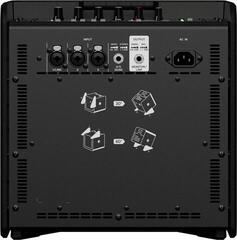
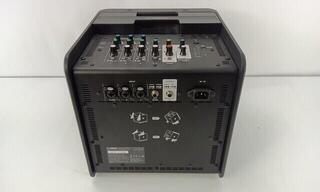
First list every source: microphone, instrument, phone, player or computer. Then check not only the number of connectors, but also their type and the option to adjust each level independently. One combo input will not handle two devices at once. If you need to process more microphones or instruments, it may be more practical to connect a mixing console, provided the speaker accepts its output.
Wireless playback is convenient for background music, but a physical input may be more suitable for a programme where you do not want to deal with pairing or phone notifications. Verify the supported connection method and prepare the correct cable. A connector of the same shape may not have the same function on two devices.
Microphone and spoken word
For voice, the speaker's placement in relation to the microphone is important. If the microphone picks up sound from the PA speaker, feedback may occur. Place the speaker in front of the presenter facing the audience, begin at a lower volume and raise the level gradually. Tone controls or basic processing may help, but they will not correct unsuitable placement on their own.
Instrument and accompaniment
A musician needs to know whether the input accepts their specific signal source. An instrument, microphone and line output are not automatically interchangeable. If you use an effects processor or external preamp, consider the entire signal path and the power for every link; a battery-powered speaker alone will not turn the other devices into a cable-free setup.
Carrying and placement
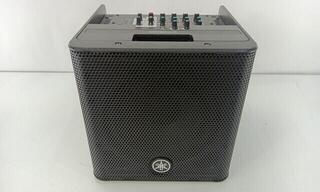
Read the weight together with cabinet shape, handle position and the distance you will need to cover. Wheels help on a level surface, but not on stairs or grass. For frequent transport, consider a suitable cover from the audio equipment covers and accessories category; its dimensions must fit and it must not cover ventilation during use.
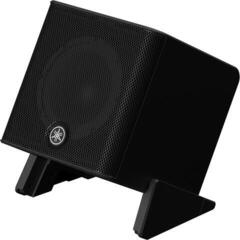
A speaker placed on the ground often plays at the audience's feet. If the manufacturer permits stand mounting, verify the diameter or mounting type and the stand's permitted load. The setup must stand on firm ground away from routes where people walk. Route cables so they cannot be tripped over.
Outdoor operation
A battery simplifies power supply, but does not by itself confirm resistance to water, dust or low temperatures. Before outdoor use, check the protection rating and conditions specified for the particular model. Protect the device from rain and direct overheating, and do not enclose it in a cover during playback if this would obstruct ventilation. Also consider stability in wind and safe relocation in a sudden weather change.
How much space you need to cover with sound
Without specifications for a particular model, it is not possible to promise reach or loudness. Outdoors, there are no wall reflections and the audience may absorb sound; in a complex room, one place can sound different from another. For a larger programme, independently designed sound reinforcement or a complete PA system may make more sense than merely a larger portable speaker.
Checks before choosing
- Write down the number and type of sound sources you want to use simultaneously.
- Verify that the inputs are independently controllable and compatible with your devices.
- Compare declared battery operation under the stated conditions.
- Measure the space for transport and consider the weight and carrying method.
- Check options for safe placement or mounting.
- Prepare cables, power and a backup appropriate to the importance of the programme.
A good choice begins with knowing the speaker's limitations before you leave for the venue. Once you separate requirements for inputs, mobility and off-grid operation, comparing models will be more accurate than choosing by appearance or one number.