Albania
 Argentina
 Australia
 Austria
 Belgium
 Bosnia and Herzegovina
 Brazil
 Bulgaria
 Canada
 Chile
 Colombia
 Croatia
 Czech Republic
 Denmark
 Estonia
 Finland
 France
 Germany
 Greece
 Hungary
 Ireland
 Italy
 Latvia
 Lithuania
 Luxembourg
 Mexico
 Moldova
 Montenegro
 Netherlands
 New Zealand
 North Macedonia
 Norway
 Philippines
 Poland
 Portugal
 Romania
 Serbia
 Slovakia
 Slovenia
 South Africa
 Spain
 Sweden
 Switzerland
 Turkey
 Ukraine
 United Kingdom
 United States of America



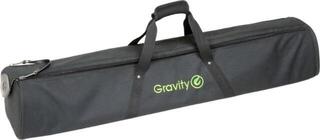
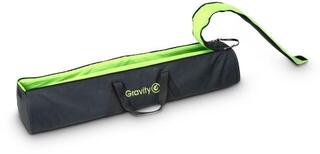
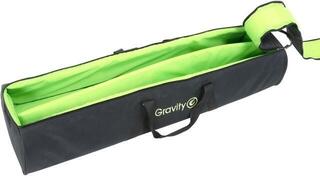
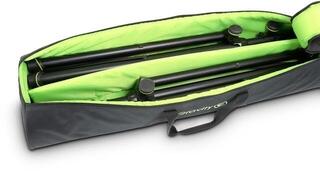
Bags for Stands for Reproboxes
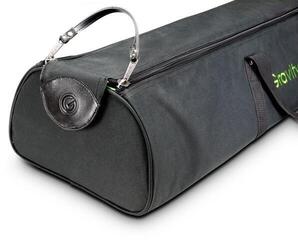
A bag for loudspeaker stands protects folded stands during transport and keeps them separate from speakers, cables and the interior of your vehicle. It also makes carrying between storage, rehearsal room and concert venue easier, especially if it fits several stands. Length alone is not decisive when choosing: check the internal dimensions, number of compartments, handle load capacity, fastening and amount of padding. A correctly chosen model limits scratches, dirt and everyday impacts, but it does not replace a hard transport case in rough handling.
Measure the folded stand first
Measure the stand when fully folded, including locking screws, rubber feet and protruding parts. Add reasonable clearance to the measured length and width so the bag can close without pressure on the zip. Too much empty space, however, lets the stand move and strike another item. If you are still choosing the actual support for a loudspeaker, compare loudspeaker stands.
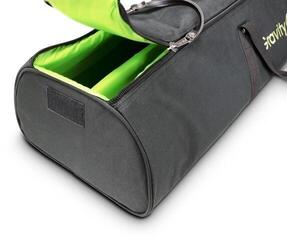
A universal bag can accommodate different models, while a shaped cover is usually designed for a certain size or set. Treat the name of a compatible stand as an initial check, not as a substitute for measurements: accessories or later modifications can change the final size. For two stands, check whether they are stored side by side, in separate sleeves or without internal dividers.
Simple bag, divided cover or hard case
| Design | Suitable for | Advantage | Limitation |
|---|---|---|---|
| Lightweight textile bag | Storage and careful transport | Low weight, easy to fold when empty | Less protection against impact and pressure |
| Padded bag | Regular transport in your own car | Separates metal stands from other equipment | Padding is still not a hard shell |
| Bag with compartments | A pair or more compatible stands | Limits rubbing between items | Dimensions of each compartment must be checked |
| Hard transport case | Frequent loading with other equipment | Better resistance to external pressure | Higher weight and greater space requirements |
Material and stressed areas
With a fabric cover, look at the density and finish of the material, reinforced bottom and seams around the handles. Sharp edges of metal fittings can be more demanding on textile than the stand’s weight itself. Padding matters mainly between the metal structure and surrounding equipment; its presence does not automatically mean protection during a fall. If you also transport speakers, suitable covers and accessories for audio equipment help divide the setup by individual items.
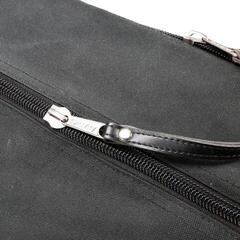
- Zip: it should close without tension and have pullers you can grip even while wearing gloves.
- Handles: check the stitching and their position relative to the centre of gravity of the loaded bag.
- Shoulder strap: frees a hand, but with a long bag check whether it twists while walking.
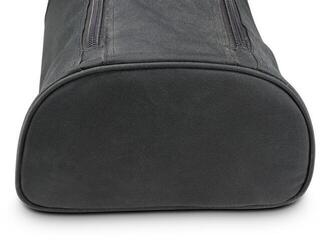
- Bottom: it touches the floor most often and carries the ends of the stands, so reinforcement is beneficial.
- Labelling: a clear window or name tag speeds up sorting of several identical bags.
How many stands to put in one bag
A shared bag for a pair saves the number of pieces of luggage, but may be impractical to carry when full. Add up the weight of the stands and compare it with the intended use of the bag; if this information is unclear, do not assume the handle will carry any contents. Separate compartments reduce mutual abrasion of locking screws and legs. Without them, secure the stands so they do not unfold or shift while driving.
For one technician, it may be more useful to divide the load into two lighter bags. For a short move from a van to the stage, unloading speed may be more important. Before buying, try lifting all stands at once and imagine stairs, narrow doorways and the distance from parking. If a full bag is hard to turn on stairs or cannot fit through a doorway, divide the load into two bags.
Accessories do not always belong with stands
Adapters, screws or short poles may have sharp edges and damage fabric in a shared compartment. Store them in a closable pocket only if it is intended for such contents. It is better to pack cables separately: they will not soil the stands, and you will immediately know what is missing when unloading. Before inserting the stand, retract the telescopic section, tighten the locks and fold the legs according to the manufacturer’s instructions.
Packing before travel
- Remove loose adapters from the stands and check that they are dry.
- Fold them to the smallest safe size and secure moving parts.
- Place individual items in their designated compartments without forcing them.
- Close the zip smoothly; if the bag bulges, the contents or arrangement are unsuitable.
- Secure the bag against movement in the vehicle and do not place heavy objects on a soft bag.
After returning, remove wet or dusty stands and let the bag dry while open. Dirt in the corners acts as an abrasive during the next transport, so remove it regularly according to the material-care instructions. Do not strain the zip by lifting the bag from its edges, and repair damaged stitching before it opens under the weight of the contents.
Checklist before choosing
Write down the folded length, widest point and number of stands. Then add the transport method: occasional storage, your own car or regular loading. Based on that, choose between a lightweight bag, padded divided cover and sturdier solution. If you carry the loudspeakers themselves too, the category of speaker bags addresses their different shape and more sensitive surfaces.
A well-fitting bag carries more steadily and the zip is not constantly under tension. Do not choose it only from a photograph or general compatibility label. Dimensions and compartments ultimately determine whether metal parts will rub during transport and whether the bag can handle your usual route from storage to stage.