Albania
 Argentina
 Australia
 Austria
 Belgium
 Bosnia and Herzegovina
 Brazil
 Bulgaria
 Canada
 Chile
 Colombia
 Croatia
 Czech Republic
 Denmark
 Estonia
 Finland
 France
 Germany
 Greece
 Hungary
 Ireland
 Italy
 Latvia
 Lithuania
 Luxembourg
 Mexico
 Moldova
 Montenegro
 Netherlands
 New Zealand
 North Macedonia
 Norway
 Philippines
 Poland
 Portugal
 Romania
 Serbia
 Slovakia
 Slovenia
 South Africa
 Spain
 Sweden
 Switzerland
 Turkey
 Ukraine
 United Kingdom
 United States of America


Bags for loudspeakers
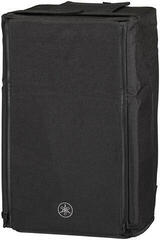
A speaker bag protects the cabinet, grille and controls against dirt, scratches and everyday impacts during carrying or storage. It makes transport to a concert, rehearsal room or studio easier if it fits dimensionally and its handles match the weight of the load. A soft cover, however, is not a hard transport case and does not provide the same protection during a fall or when other equipment is stacked on it. Before choosing, measure the entire loudspeaker including feet and control panel, then compare padding, fastening, handle openings and carrying method.
Model-specific bag or universal size
A bag designed for a particular loudspeaker usually follows its shape and handle positions, but you should still check the exact model version. A manufacturer may have several similarly named cabinets with different dimensions. A universal cover offers greater flexibility, but too much clearance allows the equipment to move and strains seams. A bag that is too tight is difficult to close and presses on controls.
Measure height, width and depth at the widest point. Include fixed feet, corners and anything that cannot be removed for packing. Store a detachable bracket, cable or adapter separately if the bag does not have a safe pocket for it. You can compare the range of speaker cabinets among loudspeakers.
Comparison of protection levels
| Solution | Suitable use | What it protects well | What it is not sufficient for |
|---|---|---|---|
| Dust cover | Indoor storage | Dust and light surface dirt | Impacts, pressure and frequent carrying |
| Lightweight bag | Occasional careful transport | Surface protection and easier handling | Rough handling or stacking |
| Padded bag | Regular transport in your own car | Scratches and minor impacts | Strong external pressure and falls |
| Hard case | Frequent loading with other equipment | Pressure and mechanical stress according to its construction | Higher weight and space requirements |
| Protective cover for use | Models that can operate in the cover | Surface protection during operation as intended | Ventilation and access if it is not designed for this |
Padding, material and interior
The outer textile should resist abrasion during normal contact with the floor and other luggage. Padding cushions smaller impacts, but its effectiveness depends on thickness, edge coverage and internal reinforcement. A soft lining protects the cabinet surface, while a reinforced bottom supports the weight when the speaker is put down. With plastic and wooden loudspeakers alike, corners, the grille and control panel are usually particularly vulnerable.
- Bottom: look for continuous reinforcement and seams outside the most stressed area.
- Corners: they should remain covered even when the bag tightens while lifting.
- Zip: it must not run directly over a protruding control or sharp edge.
- Interior surface: keep it free of sand and small metal items that could scratch the cabinet.
- Water resistance: if stated, check the conditions; zips and seams may not be waterproof.
Handles determine carrying comfort
A bag may give access to the loudspeaker’s original handles through openings or add its own straps. The openings must fit precisely; otherwise the cover shifts while lifting and fabric tears. Its own handles carry the full weight of the device, so check their stitching and intended use. A shoulder strap is useful for a lighter cabinet, but a large loudspeaker may be safer to carry with two people using firm handles.
Imagine the entire route: stairs, doors, a slippery floor and the distance from the car. Wheels on a loudspeaker or case help only on suitable surfaces and must remain accessible. Never lift a bag by its lid, zip or pocket. If the load tips while walking, the handle arrangement is unsuitable for it.
Cables and accessories
A side pocket can hold a power or signal cable, but connectors must not press against the grille or control panel. Carry heavy adapters and stand parts separately. Clean the cable before storing it, coil it using an appropriate method and secure it. With two identical bags, label which contains the main loudspeaker and which contains the monitor loudspeaker or accessories.
If you pack a complete PA setup, also look at broader covers and accessories for audio equipment. Bags for loudspeaker stands are more suitable for stands because their long shape and metal parts place different demands on the material. Separate packing reduces the risk of a stand damaging the grille or loudspeaker cabinet.
Packing and transport step by step
- Turn the loudspeaker off, disconnect it and let it cool according to the manufacturer’s instructions.
- Remove loose cables and adapters; check that the surface is dry and clean.
- Set controls so they do not protrude more than necessary, without using force.
- Put the bag on in the correct orientation and close the zip without tension.
- When loading, secure the loudspeaker against movement and do not place heavy objects on a soft bag.
In the car, orient the control panel so a neighbouring item does not press on it. A bag reduces friction and protects the surface, but it can allow easier sliding on the floor, so secure the load. Do not move the loudspeaker by dragging it using the cover unless it is designed for that. After unloading, inspect the zip and handles before lifting it again.
Bag storage and maintenance
Do not keep a damp loudspeaker enclosed in a bag for a long time. After an event, remove the device, open the pockets and let the material dry away from a direct heat source. Remove dust and small debris in the way recommended by the manufacturer; an aggressive cleaning agent can damage the surface finish. Occasionally inspect seams at the bottom, handles and zip ends.
Address a small tear or loose stitching before the bag carries full weight. If padding remains compressed after an impact or a reinforcement breaks, the original level of protection may no longer apply. When storing an empty bag, do not bend it across rigid reinforcements and do not leave sharp accessories inside it.
Quick compatibility check
First compare the model name and all three dimensions, then the position of handles, wheels, feet and control panel. Find out whether the loudspeaker is carried vertically or horizontally and whether you can insert it safely by yourself. Only then consider pockets, strap and appearance. In practice, the right size and safe carrying matter more than the number of pockets.
For an active loudspeaker, also consider cooling: do not use it switched on in a standard transport bag unless the manufacturer explicitly states such a mode. Use the category of active loudspeakers to check shapes and panel placement on specific devices. When dimensions, handle openings and carrying method fit, transport to a concert or rehearsal room is easier. However, do not expect a soft bag to protect against a fall or heavy load placed on top.